Most parking operators raise rates once a year — or not at all — and call it a pricing strategy. That approach leaves money on the table every June, July, and August, when demand patterns shift dramatically from the rest of the year and the operators who have structured rates around those patterns consistently outperform those who have not.
Summer is not a single demand environment. It is three or four overlapping demand environments compressed into 90 days: vacation-driven leisure travel at airports and resort-adjacent facilities, event-calendar explosions at urban venues, reduced daily commuter traffic offset by increased tourist and weekend traffic, and a compressed install season that creates construction disruption at some facilities. Each pattern requires a different pricing response. A flat rate increase across the board captures some of the upside and misses most of it.
This guide covers how to read summer demand signals, how to structure rate adjustments by customer type, and how to build a seasonal pricing calendar that captures peak-period revenue without damaging the monthly parker base that sustains off-peak performance.
Why Summer Demand Warrants Dedicated Rate Planning
The operational intuition that “it gets busy in summer” is not a pricing strategy. Revenue uplift requires translating that intuition into specific occupancy projections, rate windows, and decision triggers before the season starts.
The data case for seasonal rate adjustment is well-established. Industry bodies such as the International Parking & Mobility Institute track the demand dynamics behind it, and operators at event-adjacent and leisure-destination facilities routinely report occupancy swings on the order of 30–45% between peak summer weekends and mid-winter weekdays. At those occupancy levels, flat-rate pricing means full facilities at rates set for moderate-demand periods — the operator captures bodies but not yield.
The yield management principle at work is straightforward: a facility running at 95% occupancy at $12/hour is not fully optimized. The demand signal at 95% occupancy tells you that a fraction of those parkers — specifically, the least price-sensitive fraction at the end of the demand curve — would have paid $15 or $16. A rate of $12 in that environment is a subsidy to your highest-willingness-to-pay customers.
Summer rate planning is the process of identifying the windows where that dynamic applies, setting rates that capture more of the available willingness-to-pay, and doing so before the season starts rather than reactively.
Reading Summer Demand Signals
Effective seasonal pricing starts with demand intelligence gathered in April and May, not after the season peaks.
Occupancy trend comparison. Pull last summer’s hourly and daily occupancy data by day type: weekday, weekend, holiday weekend, event day. Establish the baseline demand pattern. If your facility ran above 85% occupancy on summer Friday afternoons last year, that pattern will repeat this year — and it is priced too low if your current rate is set for 60% occupancy conditions.
Forward event calendar. In most markets, 80% of summer events that drive parking demand are schedulable by April: stadium seasons, festivals, concerts, fairs, and civic events. Build the event calendar into your rate-planning horizon. An event that drove 120% utilization last August is a rate-setting opportunity this August if you plan for it before the season opens.
Competitive rate monitoring. Survey competing facilities within reasonable walking distance at least once before summer opens and plan a mid-season check. If your competitors have already adjusted for summer demand and you have not, you are the cheapest option for reasons unrelated to any strategic decision. Know where you sit in the competitive set at current and proposed summer rates.
Reservation and advance booking pace. For facilities with reservation or pre-payment capability, the pace at which summer inventory books in April and May is a leading indicator of realized demand. Strong early-season booking pace is a signal to hold rates or raise them; weak pace is a signal to evaluate whether rates are set above where demand will clear.
Structuring Rate Adjustments by Customer Type
Summer pricing is not a single dial. Transient, event, and monthly parker segments respond differently to rate changes and should be managed as separate decisions.
Transient Rates
Transient hourly and daily rates are the most appropriate target for seasonal adjustment. Transient parkers are rate-comparing at the point of decision, not price-sensitive over a multi-month commitment horizon. A transient parker making a weekend leisure decision in a market with multiple alternatives compares rates across facilities in real time — but that comparison happens at your posted rate, whatever it is.
Scheduled rate increases by window. The most operationally simple approach is tiered rate schedules: a standard rate for shoulder-season periods and a peak rate for July 4th weekend, summer concert weekends, and major festival windows. Most modern parking management systems support time-of-day and day-of-week rate scheduling. Apply event-rate windows to specific calendar dates rather than running elevated rates throughout the entire season.
Minimum stay requirements. For facilities adjacent to major summer events that drive high-demand arrival concentrations, minimum stay requirements (e.g., minimum 2 hours during event windows) reduce rate-shopping by parkers who otherwise arrive, pay for 30 minutes, and leave before the event starts — creating churn that displaces revenue-maximizing parkers who would have stayed the duration.
Early-bird structure adjustments. If your facility offers early-bird flat-rate pricing (arrive before a certain time, pay a flat day rate), summer may warrant either raising the early-bird rate or narrowing the arrival window. Early-bird pricing made sense during low-demand periods to incentivize arrivals and guarantee revenue before the daily demand peak. During high-demand summer periods, early-bird pricing may simply be discounting parkers who would have paid full hourly rates without an incentive.
Event Rates
Event pricing is the highest-leverage rate-setting decision in summer. A large urban event that overwhelms available parking within a quarter-mile creates a temporary price-inelastic demand environment — parkers will pay substantially above standard rates because the transaction is a small fraction of the overall event cost and alternatives are limited.
The appropriate event rate is not “as high as possible.” It is the rate at which your facility captures full occupancy without significant spillover to remote lots or informal parking, while maximizing yield. Price too high and parkers will walk from garages six blocks out; price too low and you fill at below-peak rates while leaving yield behind.
A practical calibration approach: review last year’s event occupancy and arrival timeline data. If your facility consistently filled to 95%+ within 45 minutes of event start at last year’s event rate, you have pricing room. If arrival paced slowly and you finished at 80% at event start, your event rate may be above clearing price.
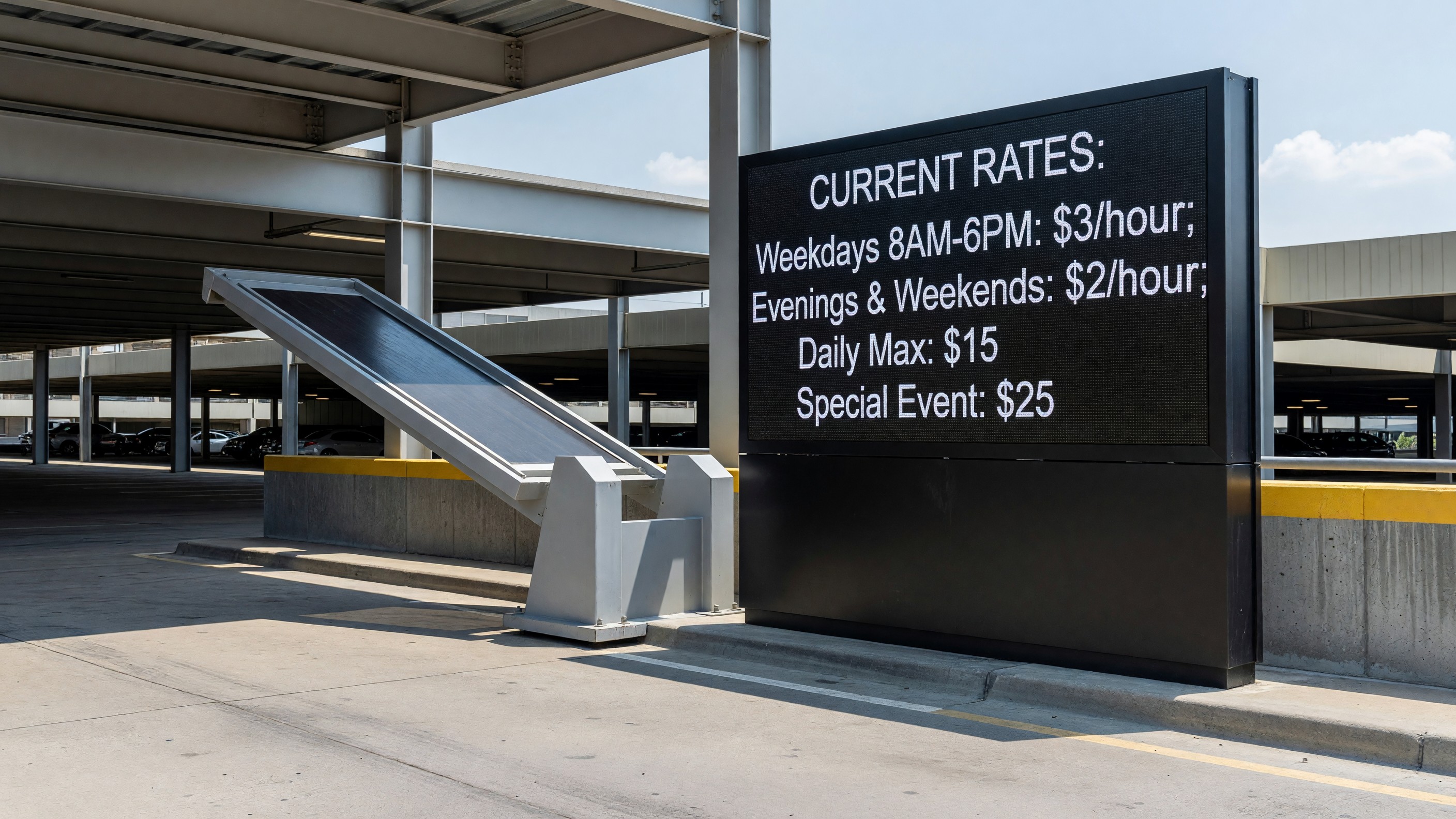
Communicate event rates clearly. Signage and pre-arrival communication matter for event pricing. Parkers making event-day decisions expect rates to be higher near a major event; unexplained rate spikes at the cashier are the primary driver of negative event-parking reviews and drive avoidance at future events.
Monthly Parkers
Monthly parkers are the baseline revenue that makes a facility financially predictable, and they should be the last lever pulled in a summer rate adjustment — not the first.
For most facilities, summer commuter demand either holds flat (downtown office workers) or declines (university facilities during academic break). Raising monthly rates to capture summer revenue at a commuter facility during a period when commuter utilization is lower than usual is counterproductive: it adds churn pressure at exactly the moment when the retained-monthly-base has less leverage over the facility’s occupancy than during the rest of the year.
The exception is resort-adjacent and leisure-destination facilities that have a meaningful summer monthly parker segment — marina parking, beach facilities, seasonal workers at tourist employers. In these markets, monthly rates often run below summer transient rates, and a summer-specific rate tier for monthly permits sold for the June–August window is appropriate.
For most operators, the correct summer monthly parker strategy is rate stability: communicate clearly that monthly rates are not changing, execute retention communication if a mid-year rate increase was already planned, and focus the summer revenue opportunity on transient and event rate optimization where the upside is larger and the downside risk (churn) is absent.
Building the Summer Pricing Calendar
Translating demand intelligence into a pricing decision requires an explicit calendar — not a mental model of “peak periods” but a dated rate schedule covering the entire June–September window.
A practical summer pricing calendar has three tiers:
Standard summer rate (weekday and non-event periods): A modest increase over the full-year standard rate — typically 8–15% — reflecting the general elevation in transient demand during summer months. Applied as the default rate for any day not designated as peak or event.
Peak weekend rate (holiday weekends and high-footfall summer weekends): Applied to Memorial Day through Labor Day weekends plus local calendar peaks (summer festivals, regional events). Typically 20–35% above the standard rate.
Event rate (scheduled major events): Applied by date to specific events. Rate set based on event-specific demand forecasting rather than a generic multiplier.
The calendar should be built in April or early May, with placeholders for any events not yet announced. A summer pricing calendar with 90% of dates populated before Memorial Day is far more revenue-effective than reacting event-by-event as the season unfolds.
Technology Requirements
Most modern parking access and revenue control (PARC) systems support scheduled rate changes via their management interfaces. The practical question is operator capacity to administer the schedule, not technology limitation.
LPR-enabled facilities with pre-booking capability have the most flexibility: rates can vary by booking date, entry time, and event calendar simultaneously. Dynamic rate-setting tools (offered by systems like Smarking, ParkWhiz/SpotHero for consumer-facing inventory, and platform-native yield tools) automate some of the calendar management burden.
Cash-and-ticket facilities without management system connectivity are constrained to posted rate changes with physical signage updates. The practical rate-change cadence for these facilities is seasonal (spring-to-summer and summer-to-fall), not event-specific, because signage administration is a real operational bottleneck.
The seasonal rate review is also the right moment to evaluate whether rate-scheduling limitations in your current system are costing measurable revenue — and whether upgrading that capability has a quantifiable payback. For related analysis, see our parking revenue technology ROI guide.
Common Mistakes in Summer Rate Setting
Raising all rates equally. A uniform percentage increase across all hours and day types captures some revenue from peak periods and leaves gaps where demand doesn’t warrant the higher rate. Segmented increases by tier produce better yield than flat increases.
Setting event rates without an occupancy target. Event pricing without a fill-rate target is guesswork. Define the occupancy outcome you’re pricing for (85%? 95%? Hold inventory for walk-up?), then back into the rate.
Raising monthly rates in summer without a retention plan. Any summer increase to monthly rates should be preceded by retention communication and should be evaluated against the churn model outlined in our rate increase strategy guide.
Forgetting to revert. Summer rate schedules that are not explicitly reverted to shoulder-season rates in September create pricing drift — the facility is still running July rates in November because the management system configuration was never updated. Build the revert date into the initial calendar setup.
Frequently Asked Questions
When should parking operators implement summer rate changes?
Summer rate changes should be in place before Memorial Day weekend. The first peak-demand weekend of the season is revenue lost if rates aren’t already set. Administrative changes to parking management systems, signage production, and permit program communication all require 2–4 weeks of lead time — which means the rate decisions need to be made in April or early May.
How much should parking rates increase for summer peak periods?
There is no universal number. The correct summer rate increase is the one that fills your facility at the highest achievable rate. Operators with strong demand data typically find that standard-season rate increases of 8–15% and event-rate increases of 20–40% above standard are within market-clearing range for most urban and leisure-destination facilities. Facilities with limited competition and high event-adjacent demand can go higher.
Should monthly parkers pay summer-specific rates?
For most commuter-focused urban garages: no. Monthly parker retention is more valuable than the marginal rate revenue from a summer increase, and commuter summer demand typically does not warrant it. For seasonal-use facilities with leisure-oriented monthly programs (marina, beach, resort), summer-specific monthly tiers are appropriate.
What data do I need before setting summer rates?
At minimum: last year’s occupancy by day type (weekday/weekend/holiday/event), current competitive rates within walking distance, and this summer’s event calendar. Optional but useful: advance reservation pace, revenue-per-space-hour by month from last year, and monthly parker churn data by quarter.
How do I handle rate communication to avoid customer complaints?
Transient parkers should see rates clearly posted before they commit to entering. Event parkers benefit from pre-arrival communication (facility website, parking app listings) that shows event-day rates explicitly. Monthly parkers should receive 30–45 days notice for any rate change. Surprise rate increases at the cashier are the primary driver of negative parking reviews and driver avoidance behavior at future events.
What is the difference between dynamic pricing and seasonal rate setting?
Seasonal rate setting is a scheduled approach: rates are planned and set in advance for specific date ranges and event windows, then adjusted manually or via system time schedules. Dynamic pricing is automated real-time adjustment based on live occupancy feeds or demand signals. Most operators without real-time dynamic pricing capability can still capture the majority of the seasonal yield opportunity through a well-structured advance calendar — dynamic automation adds incremental optimization beyond that baseline.