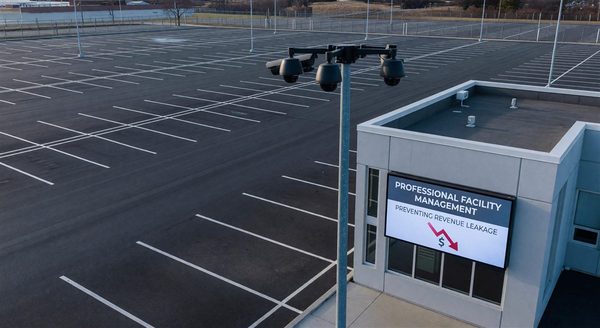
A parking revenue audit is not a punitive exercise. Done correctly, it is the most efficient diagnostic tool available to an operator who suspects — or knows — that the facility’s financial performance does not match its apparent activity level. It identifies where revenue is being lost, whether through system gaps, process failures, pricing misalignment, or outright theft, and produces actionable findings that translate directly into operational changes.
The mistake most operators make is treating an audit as a one-time response to a specific concern — a discrepancy, a new manager’s request, a lender’s requirement. The operators generating top-quartile revenue per space conduct systematic audits on a scheduled basis, often quarterly for key metrics and annually for the full audit scope. Revenue leakage is not a static problem; it evolves with staff turnover, system changes, and customer behavior shifts.
This guide covers the full scope of a parking revenue audit, the data sources required, and how to interpret and act on findings.
What a Parking Revenue Audit Actually Examines
A full audit covers four domains: transaction integrity, rate realization, cash and payment handling, and operational cost alignment.
Transaction integrity asks whether every parking event was recorded, whether every recorded event was charged correctly, and whether charges were collected. This is the foundation layer — without confidence in transaction data, nothing downstream is reliable.
Rate realization asks what fraction of the facility’s posted rates was actually collected, net of discounts, validations, comps, and overrides. The gap between posted rates and collected rates is often the single largest revenue leak in a facility.
Cash and payment handling examines whether the payment flows from customer to bank are clean — no shrinkage, no variance between what equipment records and what deposits show, no patterns indicating internal fraud.
Operational cost alignment examines whether cost categories are being reported and allocated in ways that accurately reflect the facility’s true economics, and whether controllable costs are being managed against benchmarks.
Step 1: Pull Transaction-Level Data
The starting point is a complete transaction-level export from the parking access and revenue control system (PARCS) for the audit period — typically the trailing 90 days for a quarterly audit or the trailing 12 months for an annual one.
The transaction file should include: entry timestamp, exit timestamp, payment method, amount charged, amount collected, discount or validation code applied (if any), equipment ID, and operator or attendant ID for any manually processed transactions.
If the PARCS does not export transaction-level data in this format, that is itself a finding. Systems that can only produce summary reports — daily totals, weekly summaries — cannot be audited at the transaction level, which means transaction-level anomalies are invisible.
Anomalies to look for in the transaction file:
- Zero-dollar exits from a gated facility. Any exit where the gate opened without a corresponding payment record. These fall into three categories: genuine fee waiver by an authorized user (management vehicle, maintenance), system error, or unpaid exit.
- Unusually short or long parking durations. Transactions that record entry and exit within seconds or minutes in a gated facility may indicate tailgating (someone exited on another vehicle’s gate open). Transactions recording extremely long durations (multi-day) in a short-term facility may indicate occupancy data errors.
- Discounts or validations above the authorized ceiling. If your validation program authorizes a 2-hour free period and validation codes are being applied to transactions that then leave within 5 minutes, the validation is being applied to parkers who barely used the facility — a potential misuse of validation authority.
- High volume of attendant overrides. Every PARCS records when an attendant manually overrides a rate or opens a gate manually. The ratio of overrides to total transactions should be low and should decline over time as automation matures. High override rates warrant individual transaction review.
Step 2: Reconcile Equipment Records to Deposits
For each payment method, the audit traces revenue from point of collection to bank deposit.
For credit and debit card transactions, the PARCS transaction file should match the merchant processor’s settlement records within a small tolerance for timing differences. Any persistent gap — card transactions appearing in the PARCS that don’t appear in processor settlements, or processor deposits that exceed PARCS totals — requires explanation.
For cash handling, the process is more involved. A compliant cash audit trail goes: PARCS records cash transaction → attendant shift report balances cash collected against PARCS records → cash bags are sealed and counted by a second party → deposits are made and confirmed against bank records. Any break in this chain — missing shift reports, unsigned count sheets, deposits that don’t match bag totals — is a gap that could conceal shrinkage.
For mobile and app payments, settlement flows through the app provider’s system, which should reconcile against both the PARCS records of completed sessions and the bank deposit from the app provider. App payment reconciliation is often less mature than card reconciliation because the systems are newer and integration between app platforms and PARCS systems varies.
Step 3: Analyze Rate Realization
Rate realization is the percentage of your posted rack rate actually collected, net of all discounts. Calculate it as: actual average collected rate divided by the applicable rack rate for that transaction type.
A facility with a $20 daily maximum but an actual average collected daily rate of $14.40 has a 72% rate realization. The remaining 28% — $5.60 per transaction — went somewhere: validation, discount codes, comps, or overrides.
To diagnose the gap, categorize the discount and waiver transactions in the transaction file:
- Validation program discounts. Subtotal the revenue reduction attributable to each validation account — how much was comped per merchant, per employer, per program. Compare against the program terms. If a validation agreement specifies $X maximum per month and the usage exceeds that, the merchant owes the overage or the program is out of compliance.
- Management comps and courtesies. What fraction of transactions were complimentary? Who authorized them? Is there an authorization log matching comps to specific decisions?
- Discount codes. Are promotional codes being used within their intended scope (time period, frequency limit, location) or are they being reused beyond the promotion’s intended parameters?
- Attendant-applied discounts. In facilities with manual cashier positions, attendant-applied discounts should have authorization logs. Anonymous discounts — where the PARCS records a discount without an attendant ID or authorization code — are a finding.
The rate realization analysis produces a number: of the total potential revenue available at rack rates, what percentage did the facility capture? Benchmark: well-managed facilities typically achieve 72–88% rate realization. Below 65% is a significant leak requiring program-by-program investigation.
Step 4: Occupancy vs. Revenue Cross-Check
If the facility has occupancy sensor data — loop detectors, overhead sensors, or transactional PARCS data that can be used to reconstruct occupancy — compare the occupancy record to the revenue record.
On a day when sensors recorded peak occupancy of 95%, did revenue reflect near-capacity activity? If peak occupancy data shows 200 cars in a 220-space facility but revenue for the day reflects 130 paid transactions, there is a structural gap. Either a significant number of vehicles did not pay, occupancy sensor data is inaccurate, or a large number of transactions were validated or comped to zero. Each explanation has different implications.
This cross-check is particularly revealing for ungated surface lots where the PARCS can track paid activity but physical occupancy may exceed it through unpaid parking or enforcement gaps.
Step 5: Monthly Parker Program Audit
Monthly parker programs are often treated as set-it-and-forget-it revenue — accounts established, invoices sent, payments received. In practice, monthly parker programs accumulate ghost parkers (accounts that stopped physically using the facility but whose invoices are still being paid — actually a revenue source, not a problem), over-authorized vehicles (accounts that have added vehicles without paying for additional spots), and underutilized authorizations (accounts paying for two spaces but using one).
The monthly parker audit examines:
- Active account count vs. billed count. Do your accounting records show the same number of active accounts as your PARCS access control system? Discrepancies in either direction are audit findings.
- Vehicle authorization vs. actual vehicle entries. License plate recognition data from the PARCS, matched against authorized plate lists, reveals whether the vehicles entering on monthly accounts match the plates authorized on those accounts. Unauthorized vehicles sharing access credentials is both a revenue leak and a security issue.
- Accounts past due vs. still active in access control. If your accounts receivable shows 30 accounts more than 30 days past due, do those accounts still have functional access credentials in the PARCS? Active access for non-paying accounts is a revenue leak.
Reporting and Acting on Findings
An audit that produces findings but no action is wasted. The audit report should organize findings into tiers by revenue impact and implementation difficulty.
Immediate fixes (days): Zero-dollar exit anomalies that indicate system configuration gaps, expired discount codes still active in the PARCS, past-due monthly accounts with live access credentials.
Short-term (weeks): Validation program renegotiations where usage exceeds authorized limits, attendant override policy reinforcement with supervisory review requirement, deposit reconciliation process tightening.
Medium-term (months): Rate realization improvement through pricing review using a structured parking rate-setting methodology, technology upgrades for systems unable to produce transaction-level exports, monthly parker program restructuring.
The audit’s revenue impact estimate — the annualized value of the identified leakage — should inform the priority order. For a structured approach to preventing the leakage the audit identifies, see the parking revenue leakage prevention guide. A validation program paying out $48,000 in excess comps annually gets fixed before a minor reporting gap affecting $2,000 in annual revenue.
Frequently Asked Questions
How often should a parking revenue audit be conducted?
Most operators benefit from quarterly transaction-level audits covering the trailing 90 days, with a comprehensive annual audit covering the full prior year. High-cash facilities should audit cash reconciliation monthly given the shrinkage risk. The frequency should increase after staff changes, PARCS upgrades, or any period with unexplained revenue variance.
What is the most common source of parking revenue leakage found in audits?
Rate realization gaps — the gap between posted rates and collected rates — are the most frequent and highest-dollar finding in parking revenue audits. This is usually attributable to over-broad validation programs, discount codes used beyond their intended scope, or comp practices lacking authorization documentation. Transaction integrity issues (unpaid exits, unreported cash) are often smaller in dollar terms but higher in compliance and fraud implications.
Does a parking revenue audit require outside consultants?
No. An operator with access to PARCS transaction exports, payment processor records, and bank statements can conduct a basic audit internally. Outside consultants are useful when the operator suspects internal fraud (where an independent reviewer is important for credibility), when the PARCS system is complex or data extraction is difficult, or when the audit scope includes benchmarking against industry data the operator doesn’t have access to.
How do I identify unpaid exits in my PARCS data?
In gated facilities, filter the transaction file for exits that did not have a corresponding payment record in the same session. The PARCS should flag exits where the gate opened without a fee transaction — look for exits coded as “gate force,” “manager override,” “lost ticket fee waived,” or similar codes that indicate non-standard resolution. Any gap between gate open events and payment records is worth investigating.
What should a monthly parker audit focus on first?
Start with the access control system’s authorized plate list versus the accounts receivable database. Any account in accounts receivable that is not in the access control system (or vice versa) is an immediate discrepancy. Then check payment status: active accounts that are more than 30 days past due should be flagged, and their physical access should be reviewed against your facility’s delinquency policy.
Can rate realization be too high?
In theory, rate realization above 95% could indicate that the validation and discount programs are too restrictive — that merchant partners aren’t receiving the traffic-driving benefit they need, or that employer parking programs are underutilized because the discount ceiling is too low. In practice, most operators are more likely to see the opposite problem. But any metric at an extreme — very high or very low — warrants investigation.
Further Reading from Authoritative Sources
- International Parking and Mobility Institute — Parking Revenue Management Guides — the IPMI publishes parking and mobility management resources covering revenue audit methodologies, KPI benchmarks, and operations best practices for parking facilities of all types.
- Transportation Research Board — Parking Management and Revenue Publications — the TRB has published multiple research syntheses on parking management and revenue optimization relevant to understanding audit framework design and performance benchmarks.