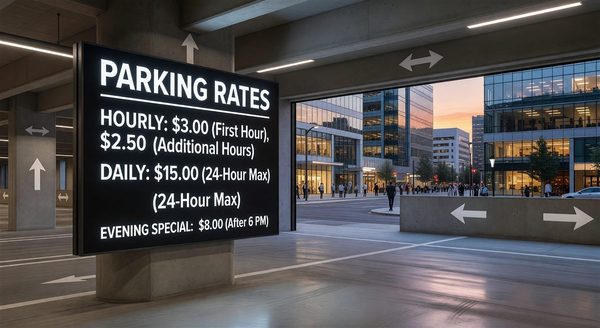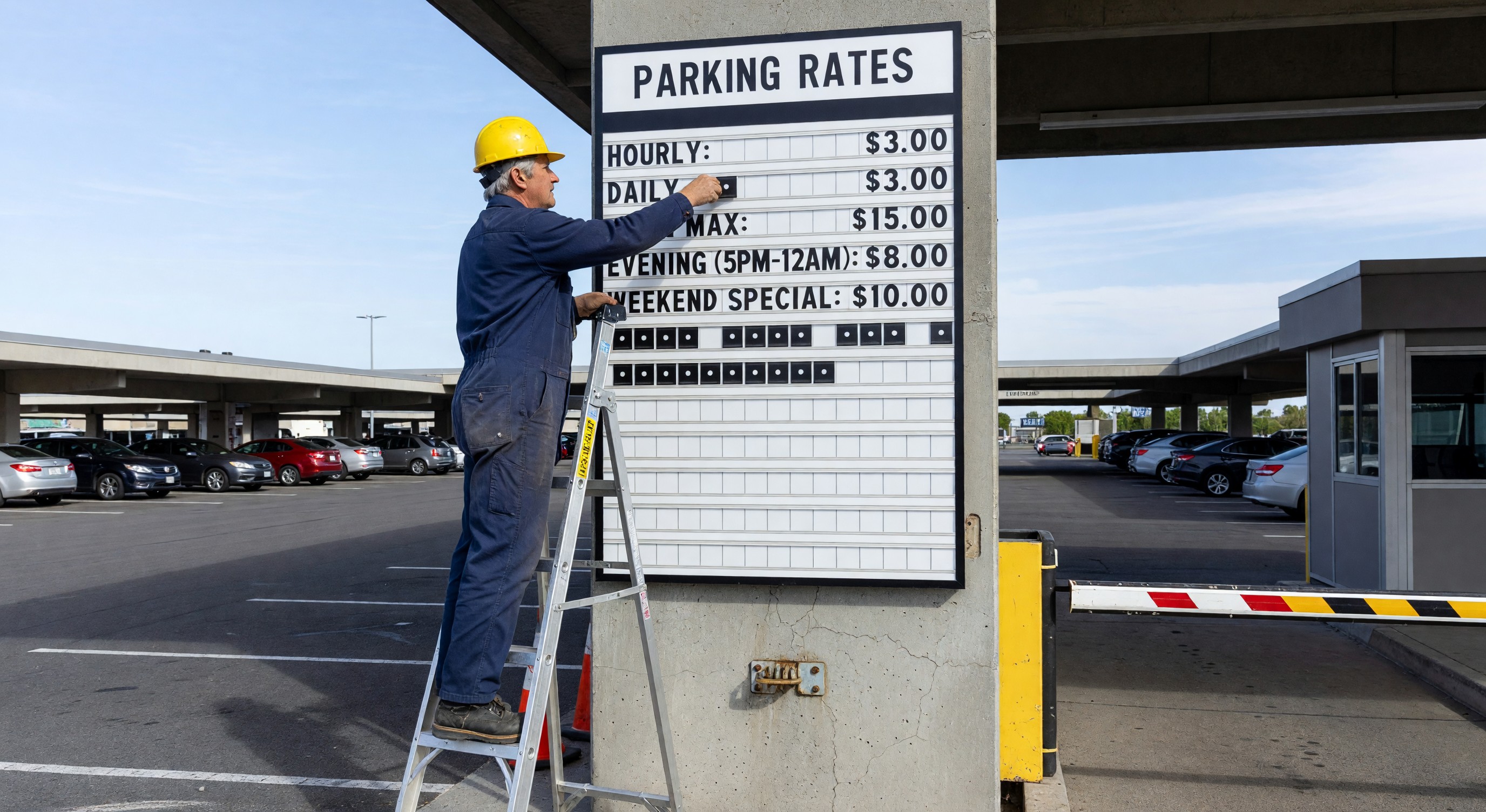
A parking rate increase that causes a 15% exodus from your monthly parker program is not a rate increase — it is a net revenue reduction disguised as pricing progress. The failure mode is common, and it follows a predictable pattern: the operator identifies that rates are below market, implements an increase without systematic communication or retention management, and watches a significant fraction of monthly accounts cancel. The new rate × reduced account count produces less revenue than the old rate × the prior account count.
Rate increases are necessary. Operating costs rise. Market rates move. Facilities that never raise rates see their RevPAS fall in real terms relative to the market, which affects asset value and competitive position. But the execution of a rate increase — the timing, communication, rollout structure, and retention response — determines whether the increase translates to improved financial performance or triggers a damaging churn event.
The Arithmetic Before the Decision
Before deciding on a rate increase, the decision should be tested against demand elasticity — the relationship between price and quantity demanded in your specific market.
Calculate your current monthly parker churn rate. If monthly parker churn is already elevated (above 4% per month), a rate increase without a service or amenity improvement may push churnable accounts over the threshold. Raising rates into an already-unstable account base is higher risk than raising rates when the base is stable.
Assess competitive pricing. Survey alternative monthly parking within reasonable walking distance of your facility. If your current rate is $120/month and alternatives within 0.3 miles are $95–$135, you’re in the market range. If alternatives are $130–$175, you’re demonstrably below market. The competitive gap is your pricing room — the amount you can raise before you’re priced above alternatives that parkers can realistically switch to.
Segment your monthly parker base. Not all monthly parkers have the same price sensitivity. Parkers who work in the immediately adjacent building with no viable alternative parking are less price-sensitive than parkers who have other facilities within easy walking distance. Parkers whose employers reimburse parking costs have near-zero personal price sensitivity. Segment visibility allows more targeted retention response to a rate increase.
Model the churn scenario. If you raise rates from $120 to $140 (+17%) and expect 10% of accounts to cancel: old revenue = 200 accounts × $120 = $24,000/month. New revenue = 180 accounts × $140 = $25,200/month. Net gain = $1,200/month, or $14,400/year. If churn is 20% instead of 10%: 160 accounts × $140 = $22,400/month — a net loss. The break-even churn rate for this example is approximately 14%. Know your break-even before you raise rates.
Timing a Rate Increase
Rate increase timing affects both the churn response and the account recovery timeline.
Avoid major employer contract renewal periods. If a significant fraction of your monthly parkers are employees of a nearby employer whose lease renews in Q1, implementing a rate increase in December — just before renewal — puts both decisions in front of the employer simultaneously. Employees may lobby the employer to find a new parking arrangement as part of lease negotiations.
Avoid periods of competitive pressure. If a competitor garage is under construction and will open in 60–90 days, holding a rate increase until after their opening impact is assessed is prudent. Raising rates while the competitive alternative is still unknown invites churn at the worst moment.
Q1 increases often perform best in commuter garages. January is a natural commitment-review point — new year, new budgets, existing parkers evaluating commute habits after the holidays. An effective Q4 communication campaign framing the Q1 increase around facility improvements or service additions can reduce the churn response by timing it as a decision people are already prepared to make.
Avoid raises during demonstrably poor service periods. If the elevator in your garage has been out of service for six weeks, the parking entry queue is consistently backed onto the street at peak arrival, or there have been recent incidents of vehicle damage or theft in the facility — a rate increase in this context reads as tone-deaf and produces elevated churn as a consequence. Resolve service issues before raising rates.
Communication Strategy
The communication of a rate increase matters as much as the rate itself. The research on price perception in consumer markets consistently shows that customers accept price increases more readily when they are communicated transparently, in advance, and with some rationale — even a generic rationale (“in line with operating cost increases”) — than when they appear without warning on an invoice.
Advance notice period. For monthly parkers, 30–45 days advance notice before the effective date is standard. Less than 30 days feels rushed and signals poor planning. More than 60 days is unnecessary and gives parkers more time to investigate alternatives.
Personalized communication, not facility signage. Monthly parkers should receive individual notification — email, letter, or account portal message — rather than learning about the increase from a sign at the entry gate or from a facility-wide bulletin. Individual notification signals that they are treated as customers with an ongoing relationship, not as anonymous transient parkers.
What to include in the notification:
- The new rate amount and effective date
- A brief rationale (operating cost increases, facility improvements, market alignment) — not defensive, just informative
- The contact for questions or account support
- Any applicable commitments (no further rate increase within the calendar year, continued service standards)
- If offering a loyalty discount for long-tenure accounts, specify the criteria
Do not lead with an apology. Operators who open rate increase communications with extended apologies signal that the increase is uncomfortable and invite the customer to treat it as a grievance. State the new rate, explain the rationale briefly, and provide a contact for questions. Professional and direct.
Retention Programs for High-Risk Accounts
Before implementing a rate increase, identify the accounts most likely to churn and implement targeted retention interventions.
Tenure-based loyalty discount. Accounts that have held monthly permits for 24+ months have demonstrated strong retention behavior and are less likely to actively search for alternatives. A 5–10% discount for accounts of 24+ months tenure costs something in per-account margin but meaningfully reduces churn among the most established accounts.
Employer subsidy coordination. If a fraction of your monthly parkers receive employer parking subsidies, connecting with the HR or facilities contact at those employers before the rate increase notification reduces the risk of an employer-level decision to move accounts. Offer the employer’s account manager a preview briefing, an employer discount if volume justifies it, or a phased rate implementation for employer-managed accounts.
Pre-pay lock-in option. Offer accounts the option to pre-pay 6 or 12 months at the current rate before the increase effective date. This generates cash flow, locks in the account, and allows price-sensitive parkers to feel they received value from acting proactively. It also signals that parkers who value cost certainty can create it through advance commitment.
After the Increase: Managing Churn Response
Even a well-executed rate increase will produce some cancellations. The 30-day window after the effective date is critical for account recovery.
Track cancellation reasons. Every monthly account that cancels after a rate increase should trigger an exit survey — even an informal one. Price alone is the reason for some cancellations; combined with a service issue, competitor offer, or change in work location, it is the reason for others. Distinguishing between price-driven churn and compound-factor churn determines the appropriate response.
Counter-offer protocol for direct cancellations. When a long-tenure account submits a cancellation, an outbound call from a customer service contact — not an automated email — with a personalized retention offer (first month at prior rate, small discount for 12-month commitment) recovers a meaningful fraction of cancellations. The accounts most recoverable are those who are price-sensitive but have no active alternative arranged.
Replace churn with waitlist. If your facility maintains a waitlist for monthly permits — which it should, both as a demand signal and as a pipeline for refilling cancelled accounts — activate the waitlist as soon as cancellations arrive. A facility that replaces churned accounts from a waitlist within 30 days recovers the revenue impact faster and with less disruption than one that treats each vacancy as a new marketing problem.
Frequently Asked Questions
How often should parking operators raise monthly rates?
Annual rate reviews are a best practice. The methodology for setting rates from first principles — rather than just adjusting from a prior baseline — is covered in the parking rate-setting guide. Operators who review rates annually can make small, predictable adjustments (3–6% per year in normal inflation environments) rather than large periodic jumps after years without increases. Small consistent increases produce lower churn response than infrequent large increases, and they prevent the below-market rate anchoring that develops when rates are held flat for extended periods.
What is the maximum rate increase that monthly parkers typically absorb without significant churn?
The answer varies by market competitiveness and parking alternative availability. In markets with limited alternatives within reasonable distance, increases of 10–15% can be absorbed with churn below 8–10%. In competitive urban markets with multiple viable alternatives within 0.25 miles, increases above 8–10% often see churn in the 12–18% range. The break-even analysis described above should be the primary decision tool.
Should I tell monthly parkers why rates are increasing?
A brief, honest rationale reduces the perception that the increase is arbitrary. “Operating costs including labor, utilities, and maintenance have increased substantially over the prior year” is accurate for most operators and is more credible than no explanation. What you should not do is make promises the rate increase is supposed to fund (“We’re raising rates to fund elevator improvements”) if the improvements are not actually planned or funded.
What is a tenure-based loyalty discount and how does it work?
A tenure-based loyalty discount offers monthly parkers who have held their account for a specified period — typically 24 months or more — a modest discount (typically 5–10%) from the standard monthly rate as recognition of their long-term relationship. The discount is funded by the higher-rate revenue from shorter-tenure accounts and new accounts, and it meaningfully reduces churn among the most established accounts where relationship disruption is most costly.
How do I handle monthly parker accounts that are employer-managed?
Employer-managed accounts — where a company holds a block of permits and assigns them to employees — require a different communication approach than individual accounts. Contact the employer’s facilities or HR manager directly before the individual notification goes out. Offer a preview of the new rate, any available volume discount, or a brief transition period. Employer accounts that decide to move represent block cancellations — losing 15 permits from a single employer cancellation is equivalent to losing 15 individual accounts at once.
What if churn after the rate increase is higher than modeled?
Immediate response is more important than longer-term strategic adjustment. Contact canceling accounts personally, deploy the waitlist to fill vacancies, and review whether the rate increase amount or the communication execution was the primary driver. If churn significantly exceeds the break-even model, assess whether a partial rollback — holding some accounts at an intermediate rate for a defined period — recovers accounts faster than waiting for waitlist fill.
Further Reading from Authoritative Sources
- International Parking and Mobility Institute — Parking Pricing and Revenue Management Resources — IPMI’s practitioner-focused resources cover rate increase strategy, monthly parker program management, and retention practice frameworks drawn from member facility experience.
- Transportation Research Board — Parking Pricing Strategies — TRB research publications on parking pricing include analysis of demand elasticity, price-sensitivity research, and evidence from rate-change implementations in urban and suburban parking markets.
For operators planning rate changes timed to seasonal demand peaks, see Summer Rate Setting: How Operators Should Adjust Pricing for Seasonal Demand for the demand-calendar framework that pairs with this rate-increase execution guide.