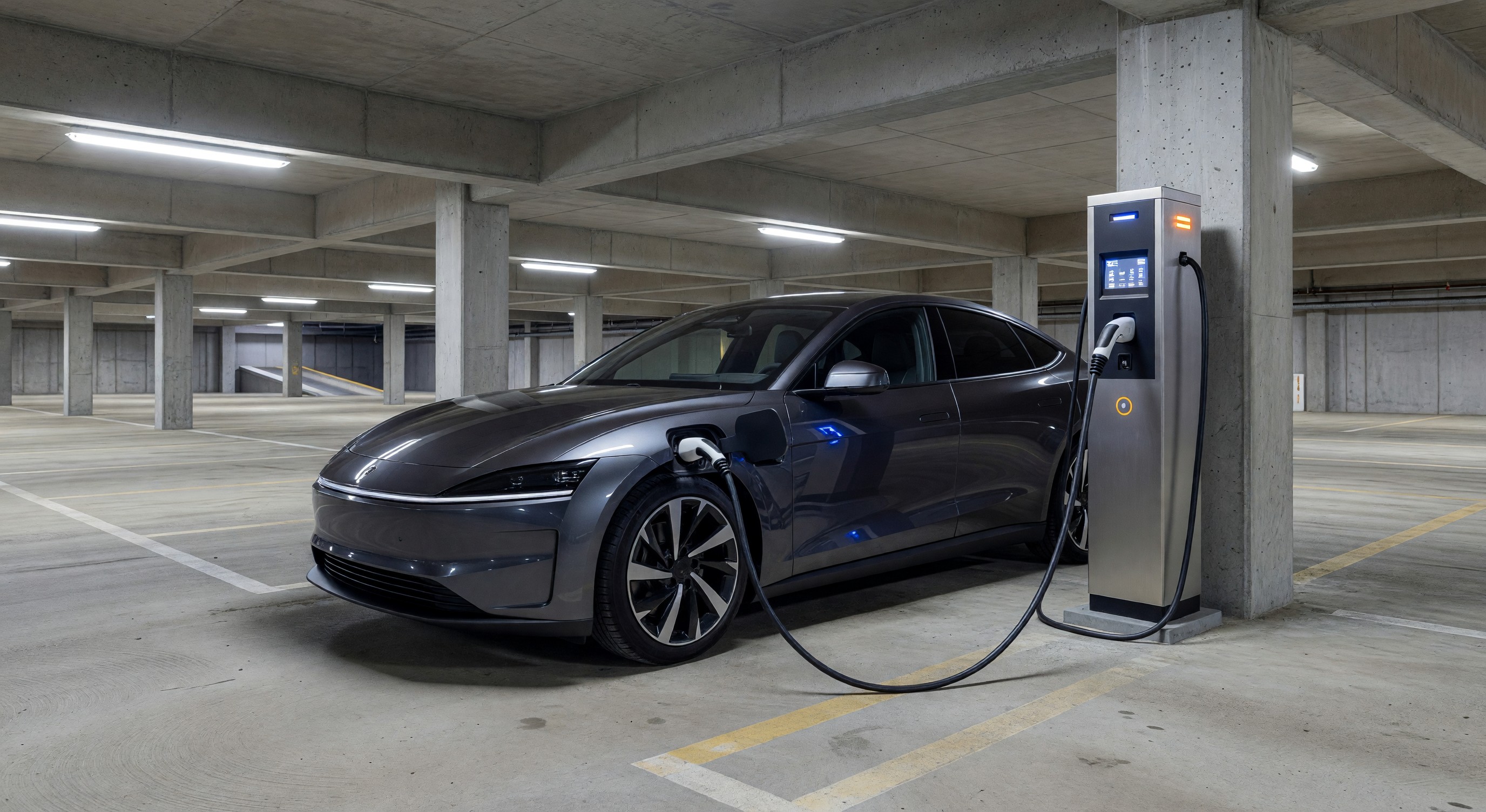
Electric vehicle charging in parking facilities has moved from an amenity addition to a genuine revenue line item. Current payment mix benchmarks — including EV-driven shifts in contactless payment adoption — are covered in the cashless payment mix benchmarks — for some operators. The distinction matters, because the economics of EV charging in parking are not uniformly favorable, and operators who deploy charging infrastructure expecting passive revenue gains often discover that utilization, utility cost management, and pricing structure determine whether charging adds to or subtracts from the facility’s net revenue.
This guide covers the financial mechanics of EV charging as a parking revenue component, what operational requirements are often underestimated, and how to think about the investment decision at different facility scales.
The Revenue Models for EV Charging
EV charging in parking facilities generates revenue through three primary mechanisms, often combined:
Per-kWh pricing. Charging sessions are priced by the kilowatt-hour of electricity delivered. The operator buys electricity from the utility at commercial rates (which include both energy and demand charges), marks it up, and sells it to EV drivers. The markup covers the utility cost, hardware amortization, network fees, and generates margin.
The fundamental constraint: most states regulate retail electricity sales, and selling electricity at a markup to the public often triggers utility licensing or regulatory requirements. Many charging network operators navigate this by structuring charges as session fees (per-unit-time or per-session) rather than per-kWh retail sales to avoid utility licensing complications. The specific regulatory landscape varies by state.
Per-minute or per-session pricing. Charging is priced by the time of connection — per minute while charging, or a flat fee per session regardless of energy delivered. This model is simpler to implement without retail electricity regulations and is more predictable for operators, but it creates misalignment for drivers: a driver with a nearly full battery who stays for 90 minutes charges minimally but pays the same as one who deploys the full capacity.
Parking fee integration. Charging is bundled with the parking fee — EV parking spaces charge a premium over standard spaces that covers the cost of the charging infrastructure and electricity. A standard space is $15/day; an EV-charging space is $22/day, with Level 2 charging included. This model simplifies the transaction (no separate charging payment), avoids retail electricity regulatory questions, and creates a clear revenue per space that is higher than non-charging spaces. The downside is that it doesn’t capture variable energy cost differences and may leave revenue on the table for high-use charging sessions.
The Capital Investment Question
EV charging infrastructure has meaningful upfront costs that must be recovered through revenue. Understanding the capital stack is essential to the investment decision.
Level 2 chargers (J1772 connector, 7–19 kW output) are the most common for parking facility installation. Hardware cost per unit ranges from approximately $1,000 to $5,000 depending on features (networked vs. non-networked, single vs. dual port). Electrical installation — conduit runs, panel capacity additions, trenching if surface installation — adds substantially to the cost: $3,000–$8,000 per installed unit is typical in a facility without pre-existing EV infrastructure. First unit installation costs are higher; subsequent units in the same area are cheaper due to shared electrical runs.
DC Fast Chargers (50–350 kW output) are appropriate for high-turnover short-stay facilities — highway adjacent, destination retail, transit hubs — where drivers want a significant charge in 20–45 minutes rather than a full charge over several hours. Hardware costs are substantially higher: $25,000–$100,000+ per unit. Electrical infrastructure requirements are correspondingly larger. DCFC typically requires three-phase power service upgrades that can cost $50,000–$150,000 in facilities that lack it.
Federal and state incentives partially offset capital costs. The federal Alternative Fuel Infrastructure Tax Credit (IRS Section 30C) provides a credit of up to 30% (capped at $100,000 per item for businesses) on qualified EV charging equipment. State-level incentives vary significantly. Utility rebate programs for commercial EV charging infrastructure installation are available in many utility territories. Operators should model net capital cost after applicable incentives, not gross cost.
The payback period on Level 2 charger investments at typical utilization rates ranges from 4–10 years — acceptable for long-hold parking assets, tight for short-term operators. DCFC payback depends on achieving high utilization (above 15–20% of available charging hours), which is demanding to achieve without specific driver demand concentration.
Utilization Is the Pivotal Variable
The business cases for parking EV charging that fail do so because utilization is lower than projected. Unlike a parking space — which has physical demand pressure from vehicles that need to park — a charging space is only revenue-generating when an EV driver chooses it specifically because they want to charge. A parking space at 85% occupancy with a charging station produces revenue only for the fraction of those users who are EV drivers and who have charge depletion sufficient to warrant a charging session.
Utilization drivers in parking facilities:
- EV penetration in the customer base. In markets with high EV adoption — major West Coast metros, wealthy suburban enclaves, tech-sector employers — the fraction of parkers arriving in EVs is higher, directly driving charging demand.
- Session duration alignment. Level 2 charging delivers meaningful charge over a 3–8 hour session. This aligns well with all-day commuter and employee parking, less well with short-stay transient. A commuter garage is a structurally better Level 2 charging opportunity than a retail surface lot with average 1-hour stays.
- Charging station accessibility and visibility. Poorly marked or difficult-to-access charging spaces have lower utilization than spaces that are clearly visible, near elevator lobbies or walkways, and easy to navigate to.
- Pricing competitiveness. Overpriced charging sessions — where the per-kWh effective price is significantly above what the driver could pay at a public fast charger — reduce utilization. Drivers who have route flexibility will often use a competitor’s cheaper or more convenient charger.
For a Level 2 charger in an all-day commuter parking facility in a high-EV market, utilization of 40–60% of available hours is achievable. At $0.35–$0.45/kWh equivalent pricing, a dual-port unit delivering 11 kW per port at 50% utilization generates approximately $7–$10 per unit per day in gross revenue. Against utility costs of $0.10–$0.15/kWh at commercial rates (including demand charges averaged out), the daily margin per unit is approximately $4–$6 — or roughly $1,500–$2,200 per unit annually in net revenue before amortization of capital.
At $8,000–$12,000 total installed cost per unit, the simple payback is 5–8 years in this scenario. Less favorable utilization, higher electricity costs, or higher installed costs extend the payback.
Utility Cost Management
The electricity cost side of the equation is where operators most frequently underestimate complexity. Commercial electricity rates include two components: energy charges (per-kWh consumed) and demand charges (based on peak power draw in the billing period). Demand charges can equal or exceed energy charges for facilities with large PARCS systems, HVAC loads, and now EV charger loads.
A DCFC that draws 150 kW during its peak charging session can add $200–$500 to a month’s electricity bill purely from the demand charge triggered by that one peak event. Facilities adding multiple DCFC units without demand charge management strategies can see electricity bills increase by amounts that substantially erode charging revenue.
Demand charge mitigation approaches:
- Smart charging and load management. Networked chargers can be configured to limit peak draw by staggering sessions or reducing maximum power during peak demand windows. Some charging network management platforms include demand optimization features.
- Battery storage. Co-locating a battery energy storage system with EV charging allows peak demand charging to draw from the battery rather than the grid, reducing demand charges. Battery storage adds capital cost but can be cost-effective at higher EV charging volumes.
- Time-of-use rate optimization. Utilities that offer commercial time-of-use rates allow operators to charge sessions at lower-cost off-peak hours. This works better for overnight charging (employee vehicles left overnight) than for daytime transient parkers who arrive and depart on their own schedule.
Integration with PARCS and Payment Systems
For operators running EV charging alongside standard parking operations, integration between the charging network management system and the PARCS is a significant quality-of-life and revenue assurance issue.
Without integration, charging and parking revenue flow through separate systems, require separate reconciliation, and appear in separate financial reports. This is manageable but adds operational complexity. With integration, a single transaction — parking plus charging — is captured as one event, one payment, and one reportable line item.
Integration quality varies by charging network and PARCS vendor. Some major charging network operators have native integrations with leading PARCS platforms; others require third-party integration middleware or custom API work. Operators evaluating charging network partners should assess integration capability with their existing PARCS system as part of the vendor selection.
Frequently Asked Questions
How much revenue can an EV charging station add to a parking facility?
Revenue per unit depends heavily on utilization. A well-utilized Level 2 dual-port unit in a commuter facility in a high-EV market can generate $1,500–$3,000 per year in net revenue (after utility costs, before capital amortization). DC Fast Chargers can generate more per unit if utilization is high (above 20%), but require significantly higher capital investment and electricity infrastructure.
What is the payback period for Level 2 EV chargers in a parking facility?
At typical utilization and revenue levels, Level 2 charger payback periods range from 5–10 years including installation costs and after applicable incentive credits. The payback compresses significantly in high-EV-adoption markets with high parking occupancy and long average stay times (commuter facilities). It extends in low-EV markets or high-turnover facilities with short average parking durations.
Should all parking operators add EV charging?
No. EV charging makes financial sense in facilities with high EV penetration in the customer base, long average stay times (commuter, employee, medical), and access to favorable utility rates or available incentives. Facilities with short average stays (under 2 hours), low EV penetration, or high electricity demand charges may not achieve payback in a reasonable timeframe.
What is a demand charge and why does it affect EV charging economics?
A demand charge is a utility billing component based on the peak power draw recorded during the billing period — typically the peak 15-minute interval. EV chargers, particularly DC Fast Chargers, have high instantaneous power draw that can trigger large demand charges even if average energy consumption is modest. Understanding the demand charge component of your utility rate and modeling its impact on charging economics is essential before making large charging infrastructure investments.
Are there federal incentives for parking facility EV charging installation?
Yes. The Alternative Fuel Infrastructure Tax Credit (IRS Section 30C) provides a credit of up to 30% on qualified EV charging equipment, capped at $100,000 per item for business installations. Additional state-level incentives and utility rebate programs are available in many jurisdictions. Incentive availability changes with tax legislation, so verify current eligibility with a qualified tax advisor.
How does EV charging integrate with existing parking revenue reporting?
Integration quality depends on the charging network management system and PARCS combination. Some systems offer native integration that consolidates charging and parking revenue into unified reporting. Others require separate reconciliation of charging network settlement data alongside standard PARCS reports. Operators should assess integration capability with their existing systems when evaluating charging network vendors, particularly if unified financial reporting is a priority.
Further Reading from Authoritative Sources
- U.S. Department of Energy — Alternative Fuels Station Data and EV Infrastructure Resources — the DOE’s EV charging resources include data on charging infrastructure deployment, utility rate structures, and federal incentive programs relevant to parking facility investment decisions.
- Environmental Protection Agency — EV Charging Infrastructure Guidance — the EPA’s electric vehicle guidance covers infrastructure requirements, environmental benefits, and policy context for commercial EV charging deployment relevant to parking facility operators.